
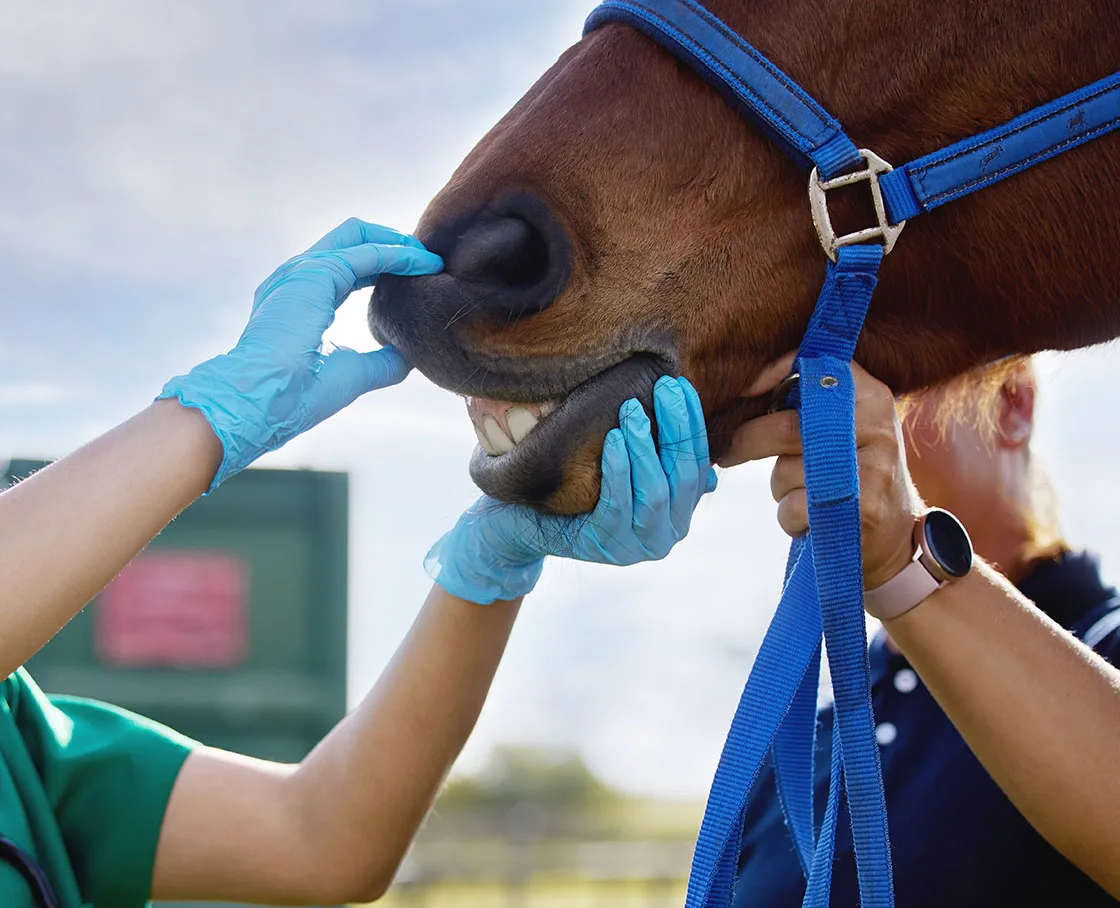
Equine Dentistry in San Angelo
Routine dental care is an important part of maintaining your horse’s health, comfort, and performance. Dental problems can interfere with chewing, nutrition, behavior, and responsiveness to the bit, yet they are not always visible without a thorough oral examination.
The veterinary team at Western Veterinary Hospital provides equine dental care to identify abnormalities, relieve discomfort, and help horses use their teeth effectively throughout every stage of life.
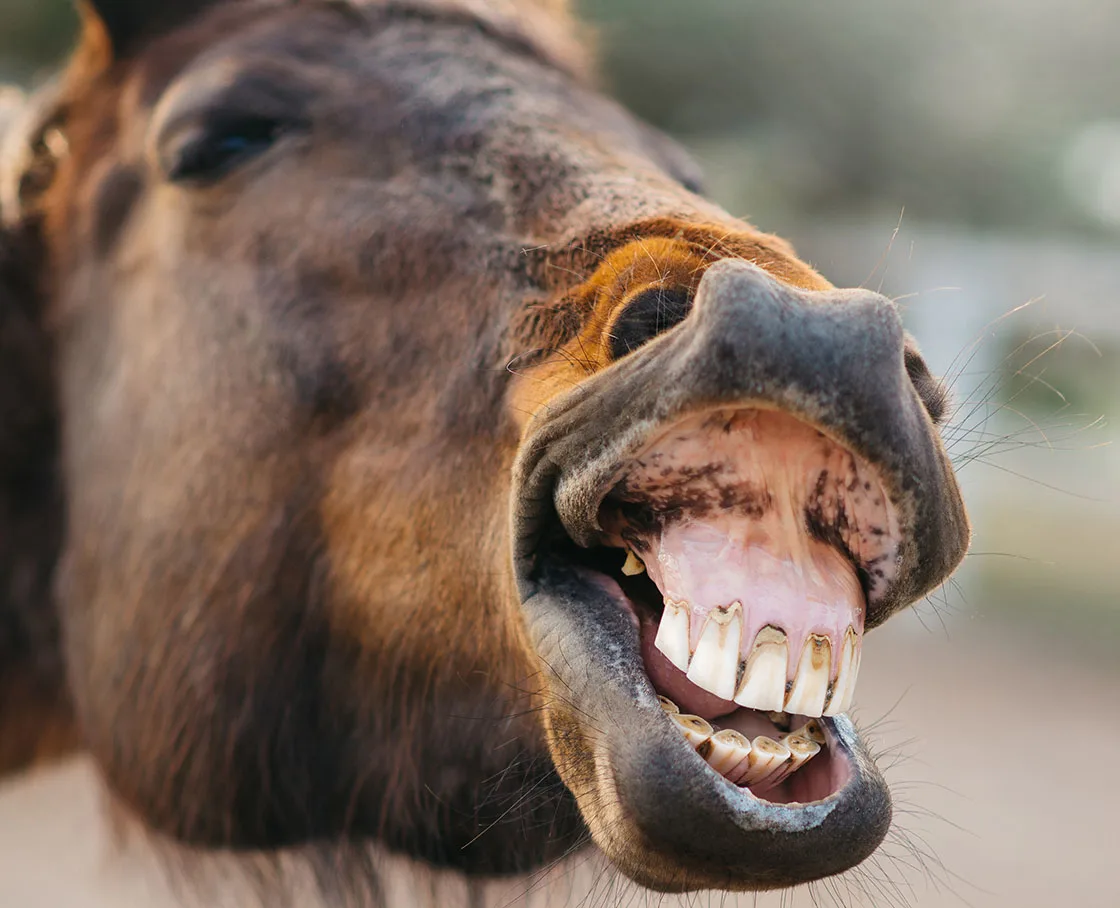
Why Do Horses Need Routine Dental Care?
A horse’s teeth are designed to grind fibrous plant material. Most equine teeth continually erupt as their exposed surfaces wear down. Because the upper and lower jaws are different widths, normal chewing can gradually produce sharp enamel points and uneven wear.
Without appropriate dental care, these abnormalities can cause oral pain, cheek or tongue irritation, difficulty chewing, and reduced feed utilization.
Routine equine dentistry can help:
Identify dental problems before they become more advanced
Reduce sharp enamel points and uneven wear
Support comfortable chewing and digestion
Protect the cheeks, gums, and tongue from injury
Address loose, damaged, or diseased teeth
Support healthy body condition
Improve comfort when wearing a bit
Monitor age-related dental changes
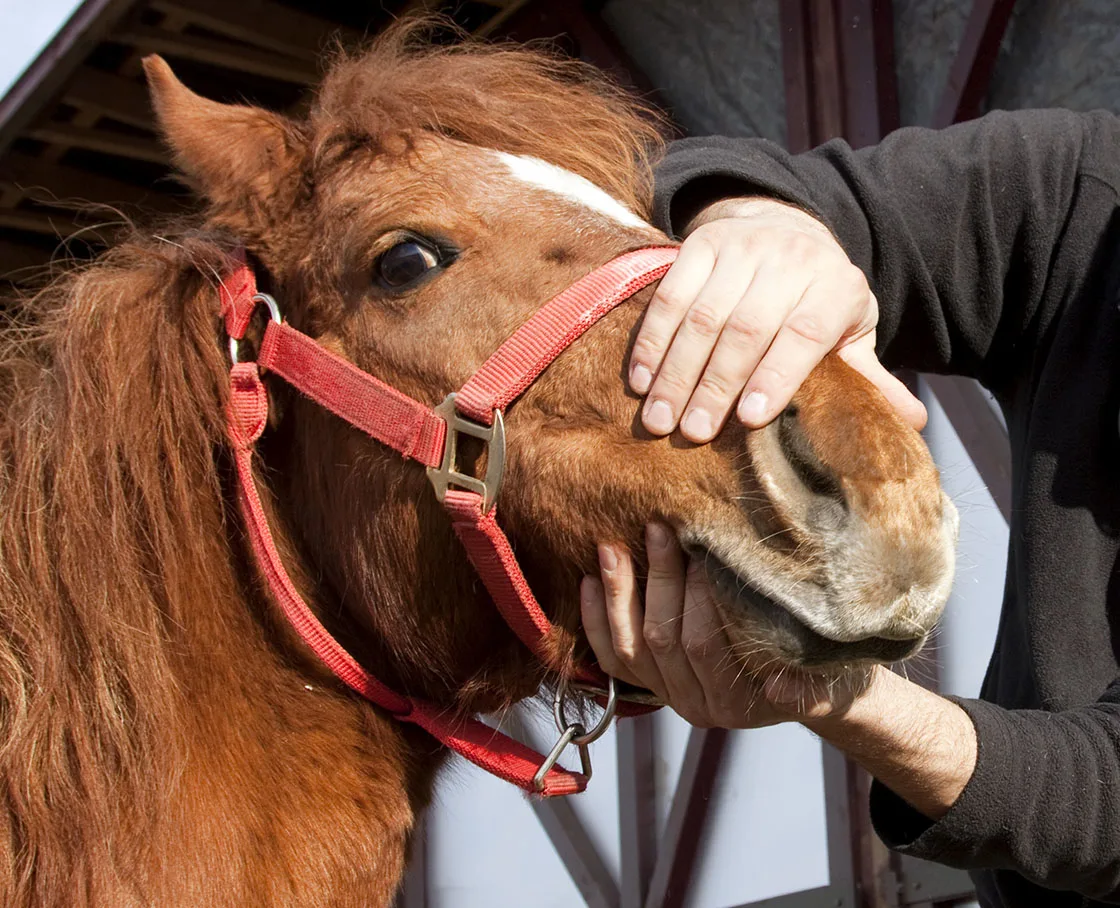
Signs Your Horse Could Have a Dental Problem
Contact your veterinarian if you notice:
Dropping feed while chewing
Wads of partially chewed hay or grass
Difficulty chewing or unusual chewing motions
Excessive salivation
Weight loss or difficulty maintaining condition
Undigested feed in the manure
Bad breath
Facial or jaw swelling
Nasal discharge, particularly from one nostril
Feed packed between the teeth and cheeks
Head tossing or resistance to the bit
Changes in behavior or performance
A recent episode of choke
Some horses continue eating despite significant dental disease. Routine examinations remain important even when no obvious symptoms are present.
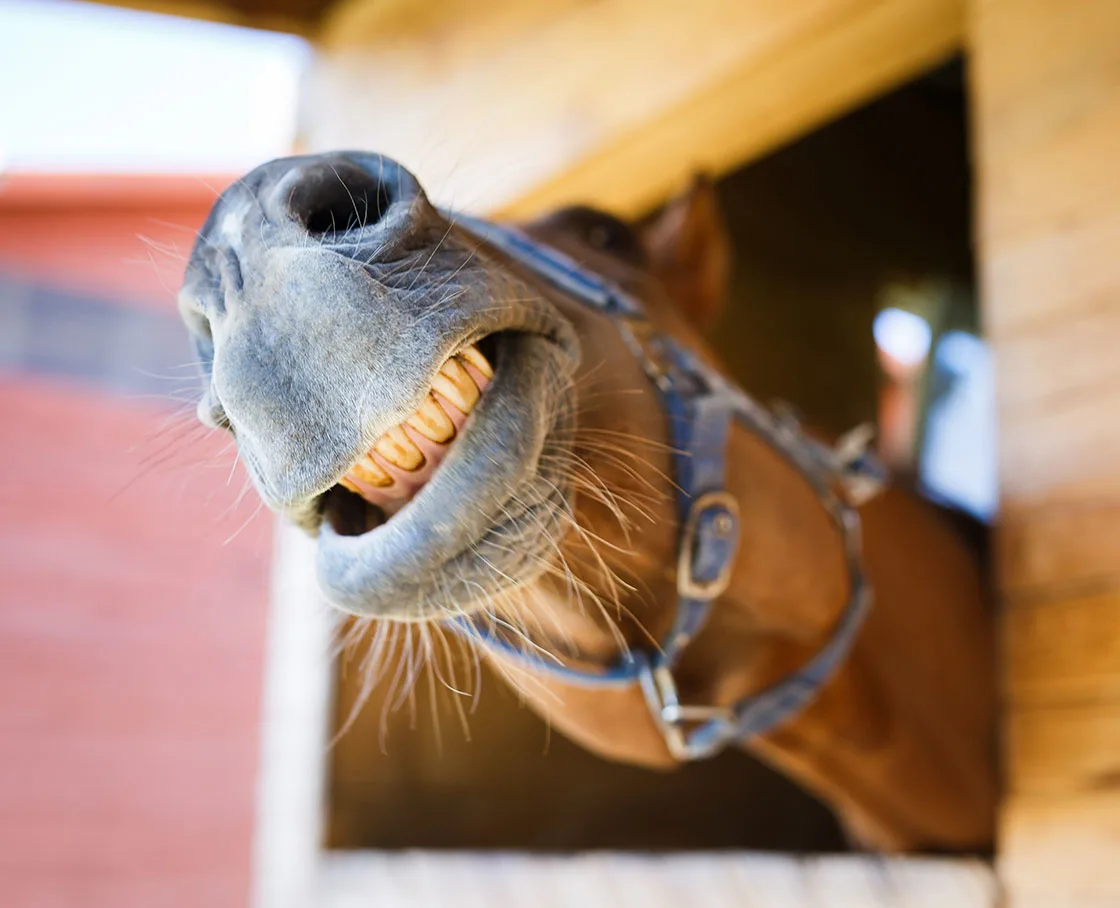
What Happens During an Equine Dental Examination?
An equine dental appointment begins with a review of your horse’s medical history, diet, age, performance, and any symptoms or behavioral changes you have noticed.
A comprehensive oral examination evaluates the teeth, gums, tongue, cheeks, and other oral tissues. Sedation is commonly used to help the veterinarian examine the entire mouth safely and thoroughly. A full-mouth speculum holds the mouth open so areas toward the back of the mouth can be properly evaluated.
After the examination, your veterinarian will explain the findings and recommend treatment based on your horse’s individual needs.
Most adult horses should receive a comprehensive dental examination at least once a year. Young horses, senior horses, and horses with known dental abnormalities can require more frequent examinations.
What Is Equine Dental Floating?
Dental floating, also called odontoplasty or occlusal equilibrium, reshapes sharp or uneven areas of the teeth. The veterinarian uses specialized hand or motorized instruments to reduce sharp enamel points, hooks, ramps, or other abnormalities that can interfere with comfortable chewing. The goal is to improve comfort and function while preserving as much healthy tooth structure as possible.
Dental floating is performed according to the findings of the oral examination rather than automatically following a fixed schedule. The amount of correction required depend on the horse’s age, dental anatomy, wear pattern, diet, and oral health. Your veterinarian will recommend an appropriate dental plan based on the findings.
Equine Dental Services at Western Veterinary Hospital
The equine dental services available at Western Veterinary Hospital are:
- Dental Examinations
- Dental Floating
- Dental Surgery
- Dental Diagnostics
- Standing Extractions
- Minimally-Invasive Extractions
Dental Care Through Every Life Stage
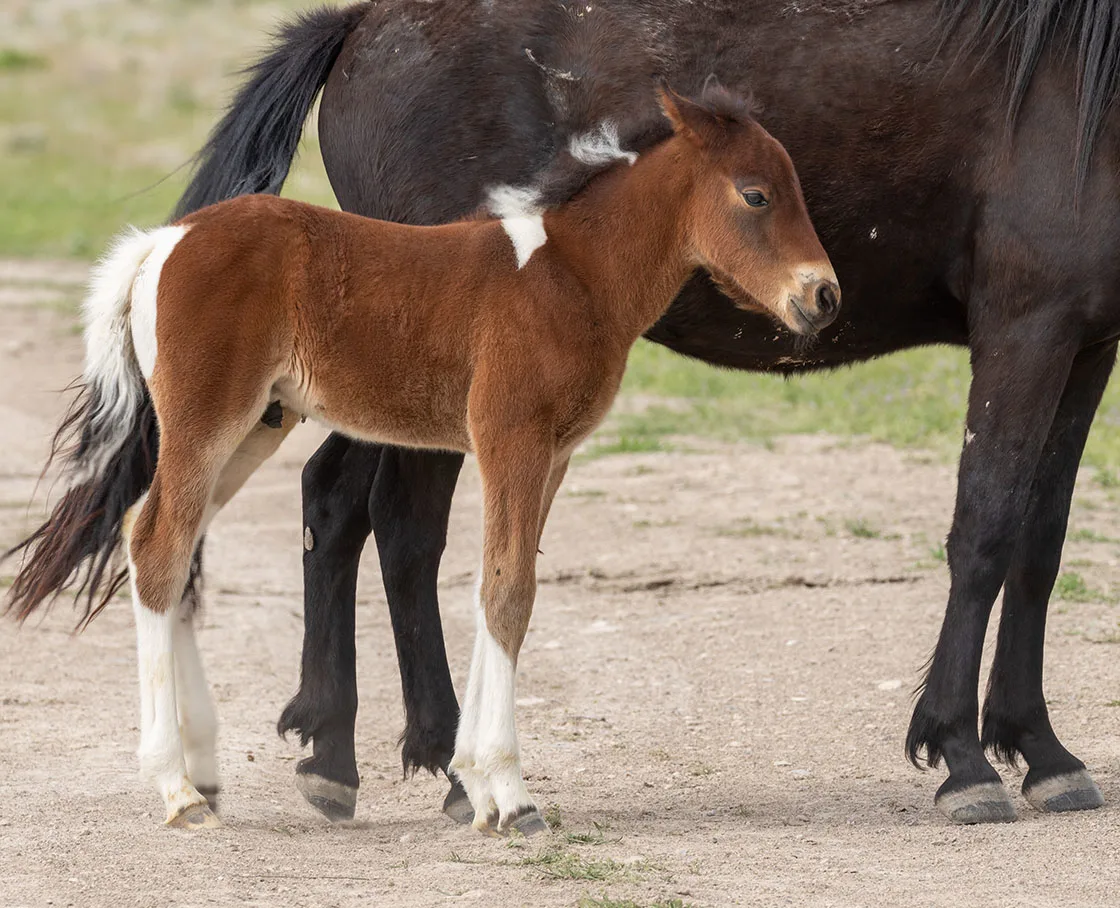
Foals and Young Horses
Young horses should be evaluated for congenital abnormalities, retained deciduous teeth or “caps,” misalignment, and other developmental concerns. Horses entering training can also benefit from an examination before regularly wearing a bit.
Adult and Performance Horses
Adult horses require routine evaluation for sharp enamel points, uneven wear, damaged teeth, periodontal disease, and other abnormalities. Dental discomfort can affect chewing, body condition, behavior, and performance.
Senior Horses
Older horses have an increased risk of periodontal disease, missing or loose teeth, excessive wear, infection, and difficulty processing long-stem forage. Regular dental evaluations can help guide treatment and feeding adjustments as chewing efficiency changes.
After an Equine Dental Procedure
Your veterinarian will provide instructions based on the treatment performed. These instructions can address feeding, medication, exercise, monitoring, and when normal activities can resume.
Contact Western Veterinary Hospital if your horse develops excessive bleeding, facial swelling, worsening nasal discharge, difficulty eating, signs of pain, or another unexpected change following treatment.
Frequently Asked Questions
What is equine dentistry?
Equine dentistry is the evaluation, diagnosis, prevention, and treatment of conditions affecting a horse’s teeth, gums, tongue, cheeks, and other oral structures.
Why do horses need their teeth floated?
Normal chewing and tooth eruption can create sharp points or uneven wear. Floating reduces problematic areas to support comfortable chewing and protect the surrounding oral tissues.
Is dental floating the same as an oral examination?
No. A comprehensive oral examination identifies dental abnormalities and determines whether treatment is needed. Floating is one possible treatment based on the veterinarian’s findings.
How often should my horse have a dental examination?
Most adult horses should have a dental examination at least annually. Young, senior, and dentally challenged horses can require examinations every six months or according to an individualized schedule.
Does every horse need its teeth floated every year?
No. The need for floating depends on the findings of the oral examination. Some horses require regular correction, while others do not need treatment at every visit.
Why is sedation used for equine dental care?
Sedation helps the horse remain calm and still, allowing the veterinarian to examine and treat the mouth more thoroughly and safely. The veterinarian will determine an appropriate sedation plan for the individual horse.
What is a full-mouth speculum?
A full-mouth speculum is an instrument that holds the horse’s mouth open during a dental examination. It allows the veterinarian to inspect areas that cannot be adequately evaluated from the outside of the mouth.
Can dental problems cause weight loss?
Yes. Dental pain, missing teeth, or ineffective chewing can make it difficult for a horse to process feed and maintain an appropriate body condition. Other medical conditions can also cause weight loss, so veterinary evaluation is important.
Can dental problems affect a horse’s performance?
Yes. Oral pain can contribute to head tossing, bit resistance, difficulty turning or stopping, behavioral changes, and reduced performance. These signs can also have other causes and require appropriate evaluation.
What are wolf teeth?
Wolf teeth are small teeth that can develop in front of the upper cheek teeth. They do not always cause problems, but extraction can be recommended when their position contributes to discomfort or interferes with the bit.
When does a horse need a tooth extracted?
Extraction can be recommended for a loose, fractured, infected, severely diseased, or painful tooth. The veterinarian will consider the tooth’s condition, location, and effect on the surrounding structures before recommending removal.
Can equine dentistry be performed at my farm?
Appointment options depend on the services and equipment available at Western Veterinary Hospital. Routine examinations and floating can sometimes be performed on the farm, while imaging, complicated extractions, and dental surgery can require treatment at the hospital.