
Equine Rehabilitation in San Angelo
Equine rehabilitation uses targeted exercises, therapeutic techniques, and specialized equipment to help horses recover from injury, surgery, illness, or reduced mobility. Rehabilitation can also support strength, conditioning, comfort, and a safe return to work or competition.
Equine rehabilitation can support horses recovering from orthopedic and soft-tissue injuries, surgery, neurologic conditions, prolonged stall rest, or physical de-conditioning. It can also be used to help manage chronic conditions or maintain athletic performance.
At Western Veterinary Hospital, equine rehabilitation plans are developed according to each horse’s diagnosis, physical condition, activity level, and recovery goals.
Benefits of Equine Rehabilitation
Equine rehabilitation can support horses recovering from orthopedic and soft-tissue injuries, surgery, neurologic conditions, prolonged stall rest, or physical deconditioning. It can also be used to help manage chronic conditions or maintain athletic performance.
A structured rehabilitation program can help:
Reduce pain and inflammation
Restore strength and flexibility
Improve balance and coordination
Maintain or increase joint range of motion
Support healing after injury or surgery
Reduce muscle loss during periods of restricted activity
Improve cardiovascular fitness and endurance
Correct compensatory movement patterns
Support a gradual return to work or competition
Maintain comfort and mobility in senior horses
Equine Rehabilitation Services at Western Veterinary Hospital
The equine rehabilitation services available at Western Veterinary Hospital are:
- Platelet-Rich Plasma (PRP)
- Stem Cell Therapy
- Shock Wave Therapy
- Acupressure
- Corrective Stretching
- Pulsed Electromagnetic Field Therapy (PEMF)
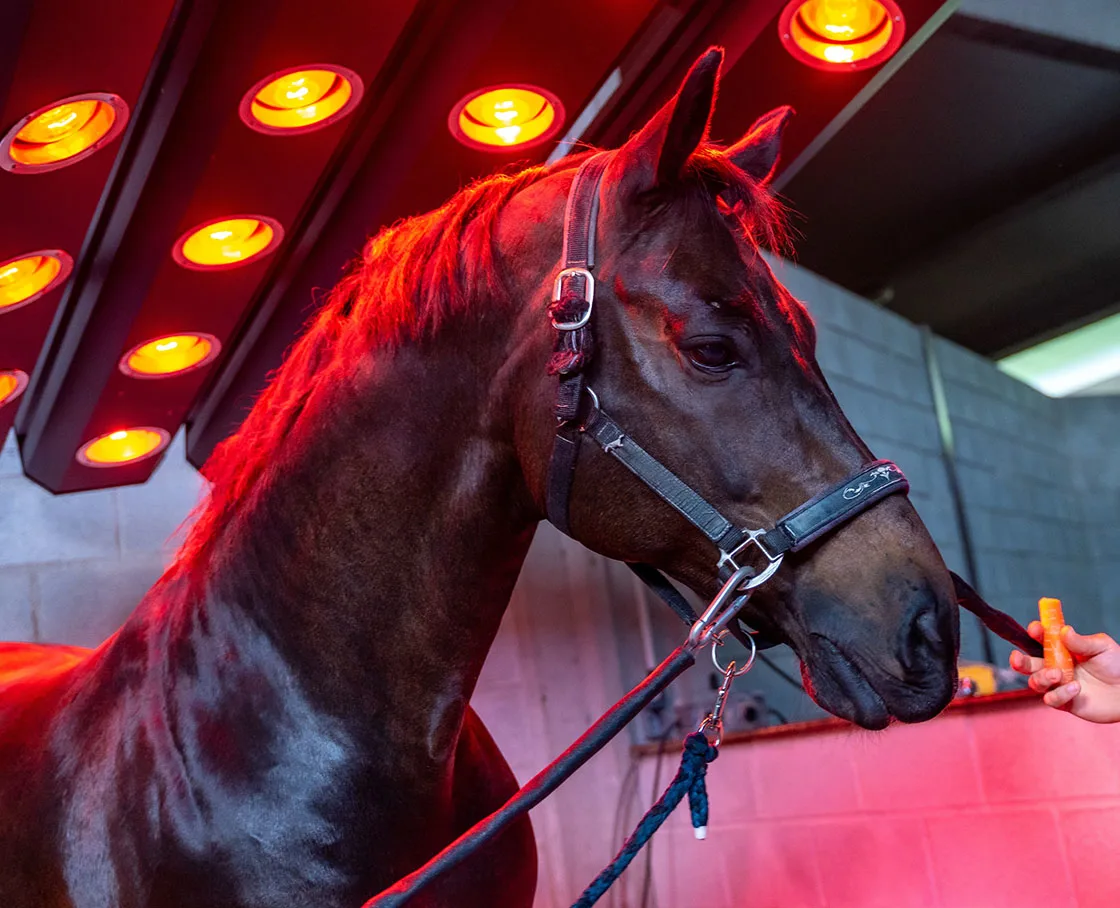
- Red Light Therapy
- Nebulization Therapy
- Alpha and Omega Therapy
What to Expect if Your Horse Needs Rehabilitation
Before rehabilitation begins, the Western Veterinary Hospital veterinary team evaluates your horse’s condition and reviews any relevant medical records, diagnostic imaging, surgical instructions, and activity restrictions. The resulting plan can incorporate controlled exercise, manual techniques, therapeutic modalities, and progressive conditioning.
Your horse’s plan will be adjusted over time based on healing, comfort, strength, movement, and response to treatment. Communication among the veterinarian, rehabilitation team, owner, trainer, and farrier, and any referring veterinarian can help keep recovery consistent and appropriately paced.